History of the Ministry of Industry and Tourism
Evolution and presence in the General State Administration
The Ministry of Industry and Tourism of Spain is the department of the General State Administration responsible for proposing and implementing government policy with regard to industry and tourism. Its current organizational structure is set out in Royal Decree 409/2024 of 23 April and is the result of a historical process of adapting the competence of the government in these areas, industry and tourism, to the economic and social realities of our country. The Department comprises two main bodies, the State Secretariat for Industry and the State Secretariat for Tourism, as well as the Undersecretariat of Industry and Tourism.
Industry and tourism are fundamental pillars for the economic and social development of Spain, playing a key role in generating employment and attracting investment.
Industry, covering sectors such as automotive, chemical, technology and food production, contributes significantly to the Gross Domestic Product (GDP) of the country, boosts innovation and competitiveness in international markets, placing Spain as a benchmark in some industries. In addition, the industry has fostered the development of infrastructure while improving connectivity, essential for balanced growth of the different regions.
For its part, tourism it is one of the most important engines of the Spanish economy, given its attractive culture, history and nature. With world-renowned destinations such as Barcelona, Madrid, Seville or the Canary and Balearic Islands, Spain has consolidated its position as one of the world’s most visited countries. In addition, tourism generates a major inflow of foreign exchange while fostering the development of small and medium-sized enterprises, particularly in rural areas who might otherwise be marginalised economically.
The combination of a solid industry and a robust tourism industry also has a positive impact on the social sphere. Both sectors foster cultural exchange, inclusion and sustainable development, while strengthening national identity. In this context, the joint development of industry and tourism, not only strengthens the Spanish economy, it also contributes to improving people’s quality of and to projecting a modern and dynamic image of the country abroad.
Development of industrial policy in Spain: from the Industrial revolution until the Development Plans.
The industrial policy in Spain began to become consolidated with the creation of Ministerio de Fomento (Ministry of Development) in 1832. Pursuant to royal decree of 9 November. This body centralised competences related to commerce, industry, manufactures and trades. Within a context of incipient industrialisation, the main objective was to advance the economic development and modernisation of key industries such as textiles, mining and transport.
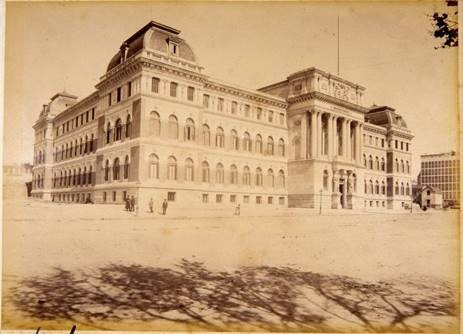
The Ministry of Development also played a key role in the construction of infrastructure, such as railways and waterways, essential for industrial growth. However, industrialisation was imbalanced, concentrated mainly in Catalonia (textiles) and the Basque country (steel).
The organic integration of industry in Development was maintained until 1928, although between 1900-1905, the department was named the Department of Agriculture, Industry, Trade and Public Works. On the other hand, the Directorate General for Trade, Industry and Labour was established in 1910.
In 1922, and pursuant to royal decree of 21 February 1922, the Ministry of labour was created that assumed responsibility for Industry and Trade. Six years later, these competences were taken over by the Ministry of National Economy that, since the decree of 16 December 1931, now in the II Republic, was renamed the Ministry of Agriculture, Industry and Trade.
Subsequently, in 1933, the Ministry of Industry and Trade was created to address specific challenges of the industrial economy. This stage coincided with an effort to diversify the industry to foster quality, sustainability, innovation in industrial processes. This contributed to the transformation of key sectors, such as the automotive, chemical and agri-food, that were able to adapt better to the requirements of international trade. Thanks to this process, Spain went from being a relatively closed economy to becoming a competitive and dynamic actor within the European environment.
Under full dictatorship, the establishment of the Ministry of Industry in 1951 marked a turning point in industrial policy. This body assumed management of major economic areas related to manufacturing production, energy and mining.
From the 1950s, Spain adopted an industrialisation policy characterised by state intervention, with the creation of large public companies such as SEAT and Iberia to foster strategic sectors; protective tariffs: and the adoption of the Development Plans (1960-1975) with the advice of international bodies such as the World Bank, which prioritised the expansion of heavy industry and consumer goods. These plans also fostered the creation of industrial development in mid-sized cities such as Valladolid or Vigo, seeking to decentralise the industry.
Industrial policy in democracy: membership of the European Economic Community and challenges of the 21st Century.
After the approval of the Constitution of 1978 Spain began to restructure its industrial policy to adapt to the political and economic changes. During the transition to democracy, the Francoist protectionist model gave way to a more market-oriented approach and integration in the global economy.
Since February 1978, the department has been known as the Department of Industry and Energy. Pursuant to Royal Decree 1270/1988 of 28 October, this was the Central State Administration Department responsible for proposing and implementing the general government guidelines on industrial and energy policy and also had a Secretariat, with a Secretariat-General of Energy and Mineral Resources and another to promote Industry and Technology. Therefore, for the first time, emphasis was placed on the need to link industry with technology and innovation.
One of the first challenges was industrial restructuring. Sectors such as mining, steel and shipbuilding, which had been pillars under Franco, faced a due to lack of competitiveness. At the same time, energy transition gained prominence, with the development of policies to diversify energy generation.
This period laid the foundations for the modernisation and economic openness of the 1980s, when Spain would be integrated fully into the European Economic Community and would go on to adopt a more sustainable and competitive development model.
Integration into the EEC in 1986 also facilitated the access to new markets, increasing industrial exports and attracting foreign direct investment. Multinational companies started setting up in Spain, encouraging the transfer of technology and the growth of value chains. In this regard, the entry into the EEC not only resulted in an industrial modernisation, but also represented a crucial step towards the consolidation of Spain as an economically integrated and innovative country ready to meet the challenges of the 21st century.
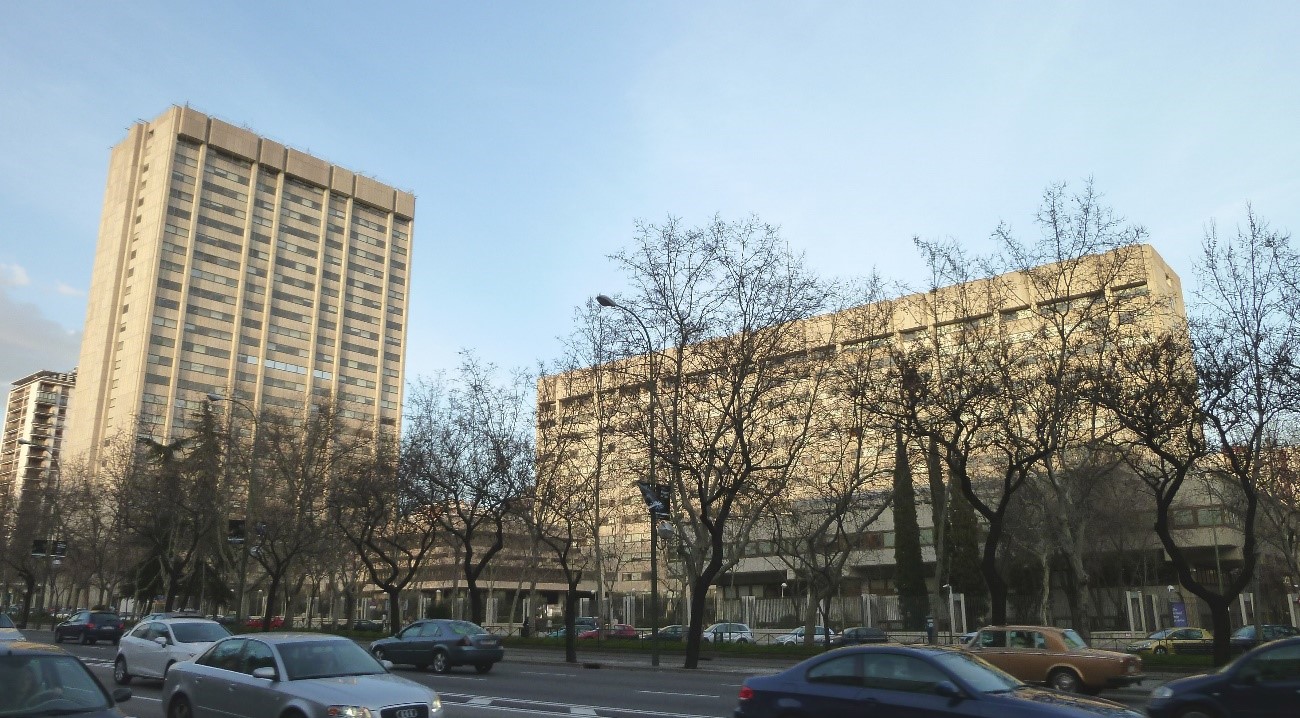
At the turn of the 21st century Spain has adjusted its industrial policy to globalisation, prioritising the competitiveness of the manufacturing sector. European integration remained essential, with structural funds earmarked for modernisation and infrastructures. However, relocation to countries with lower labour costs affected traditional sectors such as textiles and steel. To offset these effects, research and innovation (R+D) programmes were fostered as well as the National R+D+I Plan, striving to boost technological and industrial competitiveness.
The 2008 global financial crisis severely impacted the Spanish economy, revealing the need for industrial diversification. Sectors such as construction ceded the spotlight to more diversified economies, while industry focused on exports, standing out in automotive, machinery and agri-food. However, cuts in R&D investment slowed technological progress in key sectors, which represented a significant challenge to economic recovery.
During the decade starting in 2010, Spain made great progress in terms of sustainability and the digital transformation. The National Integrated Energy and Climate Plan (PNIEC) fostered renewable energies, such as wind and solar, and marked the phasing out of coal-fired power plants. The digitalisation of industry gained momentum with initiatives such as "Connected Industry4.0", fostering automation and technologies such as big data and artificial intelligence, especially in SMEs. Spain also aligned itself with the European Green Deal and programmes such as Horizon 2020, by obtaining project funding for sustainable and technological developments.
In 2020, Spain adopted a strategic industrial policy fuelled by the Recovery, Transformation and Resilience Plan (PRTR) with NextGenerationEU funds. Strategic Projects for Recovery and Economic Transformation (PERTEs) focused on key areas such as sustainable mobility, decarbonisation, strengthening agri-industrial, or sustainable development of the shipbuilding sector.
The Spanish industry faces challenges such as the global competition, regional inequalities and the need to comply with climate commitments. However, there are great opportunities, such as the continued access to European funds and the potential of emerging technologies, such as artificial intelligence, biotechnology and renewable energies to strengthen Spain’s competitiveness.
The configuration of the ministry in the XXI century
The evolution of industrial policy in Spain has also led to the creation of combined ministries in Spain, that bring together strategic areas such as Industry, Energy and Science, reflecting the need for a more integrated management and effective distribution of resources and national policies. These ministries, designed to address complex challenges with a transversal approach, allow for coordinated planning between interlinked sectors. For example, the link between Industry and Energy responds to the growing demand for sustainable solutions in industrial production, while the integration of Science fosters research and development (R+D) as drivers of technological progress.
In this way, in the VII Legislature (2000-2004), the Ministry was named the Ministry of Science and Technology and also took on responsibility for telecommunications, taking over from the Ministry of Development. The Department assumed the challenge of giving a boost to the innovation culture in our country. During that phase, both Industry and Energy were integrated into the Ministry of Economy. In 2004, they were all reintegrated into the new Ministry of Industry, Tourism and Trade.
In the XII Legislature (2016-2018), for the first time, the powers in the field of energy were separated from those of Industry itself. The former were integrated, along with Tourism and Technology into the new Ministry of Energy, Tourism and Digital Agenda. On the other hand, Industry, for the first time in a democracy was integrated into the Ministry of Economy, which was renamed the Ministry of Economy, Industry and Competitiveness. With the formation of new government in June 2018, the Ministry reintegrated Trade, going back to the traditional name of Industry, Trade and tourism. The Information Society and Digital Agenda became part of the Ministry of Economy and Energy became part of the Ministry of Ecological Transition. In the XV Legislature (2023), Trade once again became part of the Ministry of Economy, with the Department as it is today assuming competences with regard to Industry and Tourism.
The link between industry and tourism in the governments of Spain has also been a key strategy to maximise the country's economic potential, due to the complementarity of the two sectors. Spain, as and one of the world’s most visited countries and with a significant industrial base, has for decades sought integrated policies to foster the development in these areas, promoting innovation, sustainability and competitiveness.
Origins of tourism policy in Spain.
With regard to the tourism policy in Spain, the first step was taken on 6 October 1905 with the creation of the National Commission for Tourism through a Ministry of Transport decree. This commission marked the beginning of an institutional interest in organising and promoting tourism in the country, at a time when Spain began to be seen as a destination with potential, thanks to its cultural heritage and natural beauty. Although its resources and functions were limited, this milestone paved the way for future initiatives to structure the tourist sector as an important part of the national economy.
In 1911, the Royal Commissioner for Tourism was created, a body with greater capacity to promote Spain as a tourist destination and protect cultural heritage. This body was responsible for promoting the country's image abroad and enticing visitors from broad. The Royal Commissioner for Tourism also sought to stimulate the development of infrastructure related to tourism, such as accommodation and services, consolidating the idea of tourism as a strategic economic activity.
Subsequently, in 1928, the National Institute of Tourism was created, representing progress in the institutionalisation of tourism in Spain. This body not only sought to attract international visitors, it also undertook activities to publicise the country’s historical and cultural heritage. During this stage, the first tourism promotion campaigns abroad were rolled out, and sought to consolidate Spain as a beautiful destination of historical interest, with a focus on cultural tourism.
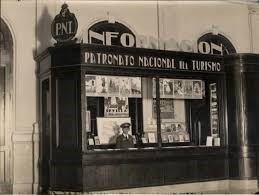
After the Civil war, in 1939 the General Directorate of Tourism was created as part of the Ministry of Interior, in a context of national reconstruction. This body undertook was responsible for reviving the tourism industry as a way of obtaining income for the national economy. During this stage, it worked in regulating tourism and creating a network of basic services to visitors, although economic constraints and policies of the time had restrained its impact.
In 1951, Spanish tourism took a qualitative leap with the creation of Ministry of Information and Tourism, which consolidated the communication and tourism promotion policies under a single body. This Ministry was crucial in the 1960s, when Spain became one of the world’s main tourist destinations, thanks to the rise of sun and sea tourism. During this period, major international promotion campaigns were rolled out and infrastructure such as hotels, airports and roads were developed, transforming tourism into a key economic driver for the country.
New demands regarding tourism: democracy and decentralisation of tourism management
With the transition to democracy Spanish tourism policy adapted to new social and economic demands, remaining a key pillar of the Spanish economy. In recent years, Spain has become one of the world’s main tourist destinations.
In addition, the Spanish constitution established an autonomous state model, which influenced the management of tourism to transfer responsibility to the autonomous communities. The coordination with the autonomous governments through the Sectoral Conference on Tourism has become a key instrument in the tourism policy.
For the first few years after the constitution, tourism was integrated into the Ministry of Transport and Communications (1978-1980), reflecting a technical and functional vision.
In the 1980s, took on an ever greater role as a strategic sector, becoming part of the Ministry of Transport, Tourism and Communications. Its inclusion in a Ministry with transport and communications highlighted its importance for infrastructure and mobility.
Another key milestone for tourism policy in this decade was the establishment in 1985 of the National Institute for the Promotion of Tourism (the forerunner of TURESPAÑA), the Ministry of Transport, Tourism and Communications with a view to implementing government policy in order to promote tourism abroad. Spain sought to strengthen its presence in international tourism markets and consolidate its image as leading destination, taking advantage of increasing opportunities in the sector.
In the 1990s, tourism was integrated successively into the Ministry of Industry, Trade and Tourism (1991-1993), the Ministry of Trade and Tourism (1993-1996) and the Ministry of Economy and the Treasury (1996-2000), reflecting a link with the economy and foreign trade.
At this stage, strategies were developed to diversify tourism, focusing on cultural tourism, rural and sustainable tourism while still promoting sun and sea tourism.
In the 21st century, tourism policy in Spain has evolved to adapt to a globalised context, characterised by the emergence of new technologies, changes in the preferences of passengers and climate challenges. The government's strategy has gone from focusing on promoting sun and sea tourism to diversifying supply, enhancing segments such as cultural, gastronomic, rural and nature tourism. This transformation has been guided by national plans such as the National Tourism Plan 2020 and/or the current Sustainable Tourism Strategy 2030, in the process of being drawn up, prioritising sustainability, digitalisation and decentralisation of tourism to less saturated regions.
In the first decade of the century, tourism remained part of the Ministry of Economy and later the Ministry of Industry, Tourism and Trade, emphasising its importance as an economic powerhouse.
The Ministry of Industry, Energy and Tourism was created in 2011: integrating tourism with key sectors for innovation and energy sustainability. Thereafter, in the XIII Legislature, in 2018, tourism once again became part of the Ministry of Industry, Trade and Tourism, recovering an integrated perspective. This period came in the waked of the COVID-19 pandemic, during which tourist policies have evolved towards recovery, digitalisation and sustainability.
In the XV Legislature (2023), the current configuration of the Ministry of Industry and Tourism has been established.
Has this page helped you?
Thanks for your comments.